
The Wedding Photographer’s Guide to Buying an On-Camera Flash
There is a particular quiet that settles over a photographer’s bag the night before a wedding. It is a moment of ritual: checking sensors, clearing cards, and ensuring every piece of glass is polished. But of all the tools we carry, the on-camera flash is perhaps the most misunderstood. It is often viewed as a "necessary evil" for dark reception halls, yet when mastered, it becomes the brush that paints light where there was none.
For the wedding photographer, a flash is not just a light; it is insurance. It is the ability to walk into a dimly lit historic chapel or a windowless ballroom and still deliver the crisp, airy aesthetic your brand is built upon. However, stepping into the world of flash photography often feels like learning a second language, filled with acronyms and technical specs that can feel more like a physics exam than a creative pursuit.
At Von Creative, we believe that technical mastery is the foundation of creative freedom. Whether you are prepping for your first solo wedding in Raleigh or you’re a seasoned pro looking to upgrade your kit for a grand gala in Wilmington, understanding the "why" behind your gear is essential.
The Lexicon of Light: Understanding the Technicalities
Before you swipe your card for a new piece of gear, you need to understand the language the industry speaks. These aren't just buzzwords; they are the mechanical limits that will define what you can: and cannot: capture during the high-stakes moments of a wedding day.
1. Guide Number (GN): The Horsepower of Light
Think of the Guide Number as the horsepower of your flash. It is a numerical representation of the flash’s maximum light output. A higher GN means the flash can reach further distances or allow you to shoot at lower ISOs and narrower apertures.
While manufacturers often list the GN at the flash's maximum zoom setting (which can be misleading), it’s a good baseline for power. For a wedding photographer, you want a flash with enough "grunt" to bounce light off a 20-foot ceiling and still illuminate a wedding party standing ten feet away.
2. TTL (Through The Lens): The Auto-Pilot
TTL is an automated metering system where your camera and flash "talk" to each other. Before the actual photo is taken, the flash fires a nearly invisible "pre-flash." The camera looks at this pre-flash through the lens, calculates how much light is needed to expose the scene correctly, and sets the flash power accordingly: all in a fraction of a second.
Why it matters: During a wedding processional, the distance between you and the bride is constantly changing. TTL handles these shifts automatically, allowing you to focus on composition and emotion rather than clicking your power dials.
3. HSS (High Speed Sync): Defying the Shutter Limit
Most cameras have a "sync speed": usually around 1/200th of a second. If you try to shoot faster than that, you’ll get a black bar across your image. HSS allows your flash to pulse rapidly, mimicking a continuous light source, which lets you shoot at shutter speeds up to 1/8000th of a second.
Why it matters: If you’re shooting a mid-day portrait session in the bright Carolina sun and want that dreamy f/1.2 bokeh, your shutter speed will likely be very high. Without HSS, your flash wouldn't work, leaving your couple's faces in shadow.
4. Recycle Time: The Heartbeat of Your Gear
Recycle time is the number of seconds it takes for your flash to be ready to fire again after a shot. At a wedding, this is perhaps the most critical spec. If you capture the "first kiss" but your flash takes three seconds to recycle, you might miss the "walk back up the aisle" because your light wasn't ready.
Pro Tip: Look for flashes that use Lithium-ion (Li-ion) batteries rather than AAs. Li-ion batteries provide significantly faster recycle times and more "pops" per charge.
5. Radio System: The Invisible Connection
Modern flashes have built-in radio receivers. This allows one flash on your camera to trigger other flashes placed around the room (off-camera flash). This is essential for lighting up dance floors or creating dramatic back-lit "epic" shots at the end of the night.
The Curated Recommendation List
Choosing a flash is about balancing budget with reliability. Here are our top picks for wedding photographers at every stage of their journey.
The Budget Conscious: Godox TT685II
If you are just starting out or need a reliable backup that won't break the bank, the Godox TT685II is the industry’s favorite entry point.
Power: Strong GN 60.
Pros: Full TTL and HSS support, great build quality, and it works flawlessly with the Godox radio ecosystem.
The Catch: It runs on four AA batteries. To get the best performance, you’ll need to invest in high-quality rechargeable batteries like Eneloops.
Best For: Second shooters or those doing their first few weddings.
The Professional Standard: Godox V1 or V1 Pro
The Godox V1 has revolutionized the wedding industry. Its round head provides a more natural, gradual light falloff compared to traditional rectangular flashes, making it much easier to "hide" the fact that you used a flash.
The Battery: It uses a dedicated Li-ion battery that provides near-instant recycle times (1.5 seconds at full power) and around 480 full-power shots.
The Pro Upgrade: The V1 Pro features better thermal management, meaning it won't overheat as quickly during a high-energy dance floor session.
Best For: The working professional who needs speed, reliability, and beautiful light quality.
The High-Performance Elite: Profoto A10 or Canon EL-1
When failure isn't an option and you need the absolute pinnacle of reliability and color consistency, you move into the premium tier.
Profoto A10: Known for its legendary "Profoto Light" and incredibly intuitive interface. It is the gold standard for luxury wedding photographers who want a flash that "just works" every single time.
Canon EL-1: If you are a Canon shooter, the EL-1 is a beast. It features an active cooling system (a literal fan) to prevent overheating and has a recycle time of 0.9 seconds. It is built like a tank and weather-sealed for those rainy wedding days.
Best For: High-volume wedding photographers and those working in demanding, high-stakes environments.
From the Field to the Studio
One of the greatest benefits of investing in a high-quality flash system like Godox is the versatility it offers beyond the wedding day. At Von Creative, we’ve designed our 2,000-square-foot studio space to be a seamless extension of your professional workflow.
We provide Godox triggers for free with every studio rental. This means the Godox V1 or TT685II you bought for your weddings will work perfectly with our high-powered studio strobes and our 22-foot wide cyclorama wall. You can use your on-camera flash as a "fill" or a "hair light" while our studio strobes do the heavy lifting, all controlled wirelessly from your camera.
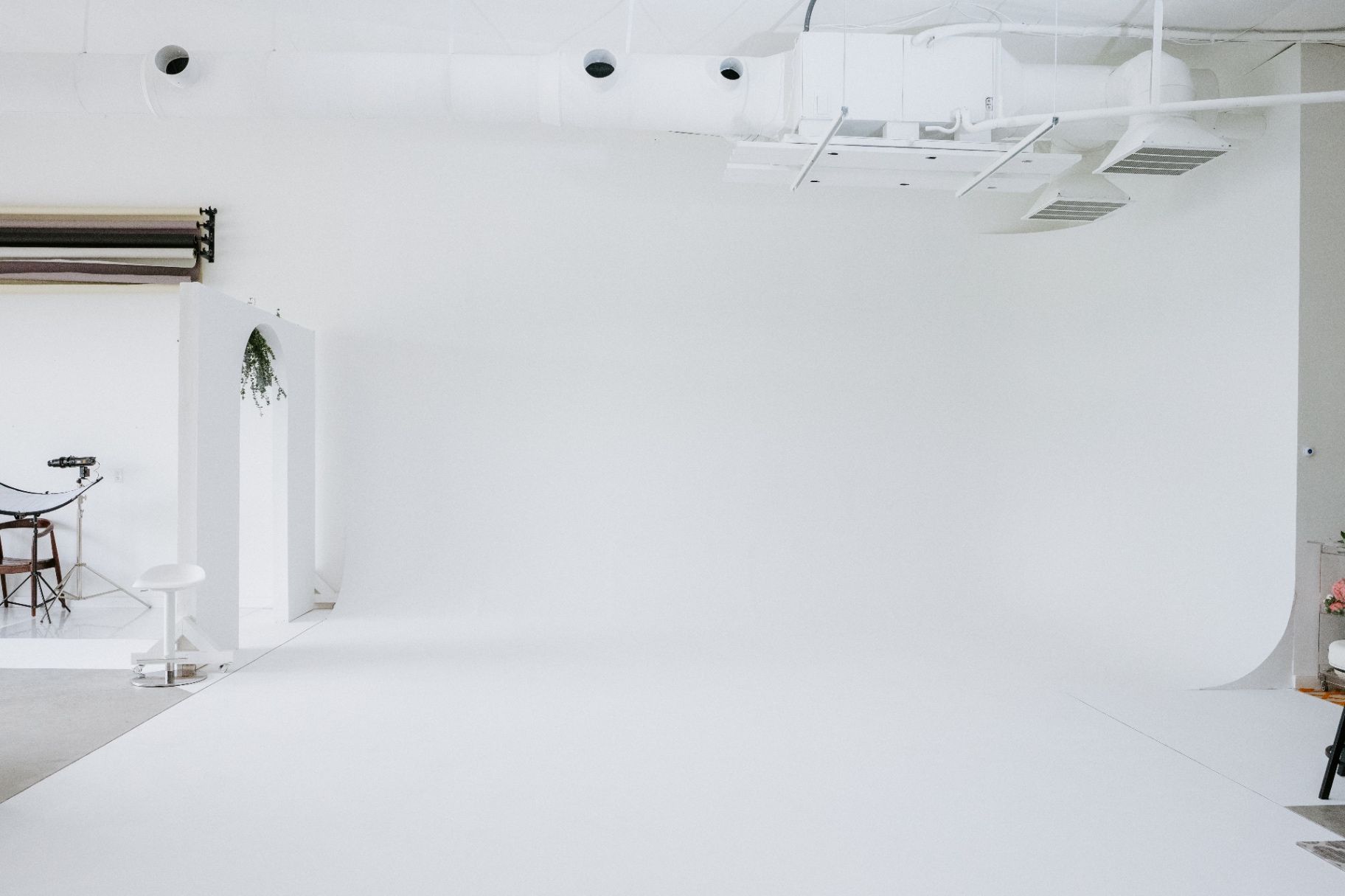
This "hybrid" approach: using the same system for weddings and studio sessions: reduces your overhead and ensures you are deeply familiar with your gear’s behavior in every lighting scenario.
A Recap for the Road
Buying a flash is an investment in your peace of mind. Here is a quick checklist to keep in mind:
Prioritize Recycle Time: At weddings, speed is more important than raw power. Li-ion batteries are worth the extra cost.
Demand TTL and HSS: Don't handicap yourself. You need the automation for fast moments and the sync for the sun.
Consider the Ecosystem: Buy into a brand (like Godox) that allows you to grow from a single on-camera flash to a full studio setup.
Think About the Falloff: Round-head flashes (like the V1 or A10) produce a softer, more pleasing light that mimics natural light better than rectangular heads.
Elevate Your Light
Light is the most powerful tool in a photographer’s arsenal, but it shouldn't be a source of stress. Whether you are practicing your bounce-flash technique or testing out a new three-light setup for a bridal portrait, having a dedicated space to experiment is key.
If you’re looking to master your new flash in a controlled, beautiful environment, we invite you to book a session at Von Creative. Our pre-designed setups and professional equipment are here to help you bridge the gap between "getting the shot" and creating a masterpiece.