
The "Hidden" Costs of Pro Photography: Why that $3k wedding package is actually $800 after the "invisible" bills hit.
You just booked it. The notification pings, the contract is signed, and a $3,000 retainer or final payment lands in your bank account. For a split second, you feel like a mogul. You start doing the mental math: If I book three of these a month, I’m making six figures!
But then, the month actually happens. The software subscriptions auto-renew. You realize you need to set aside a massive chunk for the IRS. Your shutter starts clicking a little louder, reminding you that your camera has an expiration date. By the time the dust settles and you’ve actually delivered the gallery, you look at your balance and wonder where the other $2,200 went.
If you’ve ever felt like you’re "making money" but your bank account is perpetually gasping for air, you aren't bad at photography. You might just be underestimating the "invisible" bills that keep a professional studio running in 2026.
Let’s pull back the curtain on the $3,000 wedding package and see why your "take-home" is often closer to $800 than $3,000.
The "Invisible" Subscription Trap
In the early days of digital photography, you bought a disc of software and used it until your computer died. Today, we live in the era of the "subscription creep." It’s $20 here, $50 there, and suddenly you’re paying for a small car every month just to keep your files accessible and your emails professional.
Adobe Creative Cloud: Whether you like the cloud or not, Lightroom and Photoshop are the industry tax. ($55/mo)
CRM (Honeybook / Dubsado): The "brain" of your business. It handles your contracts, invoices, and workflows. Essential? Yes. Free? Far from it. ($40/mo)
Gallery Hosting (Pixieset / CloudSpot): Delivering high-res files via a beautiful, branded interface is no longer optional. ($25/mo)
Cloud Storage & Backup (Backblaze / Dropbox): In 2026, clients expect their RAW files to be protected by three layers of redundancy. ($30/mo)
Website & Portfolio: Squarespace, Showit, or WordPress hosting plus your domain. ($30/mo)
When you aggregate these, you’re looking at $200–$300 a month before you’ve even charged your camera batteries. If you only shoot one wedding that month, that $300 comes straight out of your $3,000.
Uncle Sam’s Cut (The 15.3% Sting)
If you’re transitiong from a 9-to-5 to full-time photography, the self-employment tax is usually the coldest shower you’ll ever take. When you work for someone else, they pay half of your Social Security and Medicare taxes. When you work for yourself, you are both the employer and the employee.
That means you’re on the hook for the full 15.3% self-employment tax. And that is before your regular federal and state income taxes.
On a $3,000 package, if we assume your profit (after expenses) is around $2,000 for that specific job, the government is going to want roughly $300 just for the privilege of being self-employed. Add another 10–15% for federal income tax, and suddenly $600–$900 of that $3,000 isn't yours. It never was. It’s just "passing through" your account on its way to the treasury.
Gear Depreciation: That $6k Camera is Dying
We love our gear, but we often forget that every time we press the shutter, we are consuming a piece of equipment. A professional camera body like the ones we use at Von Creative isn't a permanent asset; it’s a consumable.
A high-end mirrorless body costs roughly $4,000–$6,000. If that camera is rated for 200,000 shots and you shoot 3,000 images per wedding, you can realistically get about 60–70 weddings out of it before it’s "spent" or technologically obsolete.
Camera Body Replacement Fund: ~$100 per wedding.
Lenses & Maintenance: ~$50 per wedding.
Computer & Editing Tech: Your MacBook Pro won't handle 2026-sized RAW files forever. You need to be saving $100 a month for the inevitable upgrade.
If you aren't baking these "replacement costs" into your $3,000 price tag, you’re essentially borrowing money from your future self to pay for today’s lunch.
Insurance & Legal: The Boring Shield
No one likes talking about general liability insurance or errors and omissions (E&O) coverage until a guest trips over a light stand or a memory card corrupts during the first dance.
Professional insurance typically runs $500–$800 a year. Legal fees for contract reviews or staying compliant with local business licenses can add another few hundred. While it feels like "dead money," it’s the only thing standing between you and a catastrophic lawsuit that could end your career.
The "Studio Strategy": Owning vs. Renting
One of the largest overhead drains for a photographer is physical space. For years, the "dream" was to own a private studio. But in 2026, the math has shifted. Between commercial rent, utilities, high-speed fiber internet, and the constant need to update props and backdrops, a private studio can easily cost $2,500+ per month.
This is where the "Studio Strategy" comes in. Instead of carrying that $30,000-a-year burden, savvy photographers are moving toward a rental model.
Renting a space like Von Creative allows you to access a 22-foot wide cyclorama wall and over 900 items of equipment for a fraction of the cost of a monthly lease. You pay for the space when you're actually making money, and we handle the "hidden" costs like electricity, cleaning, and equipment maintenance.
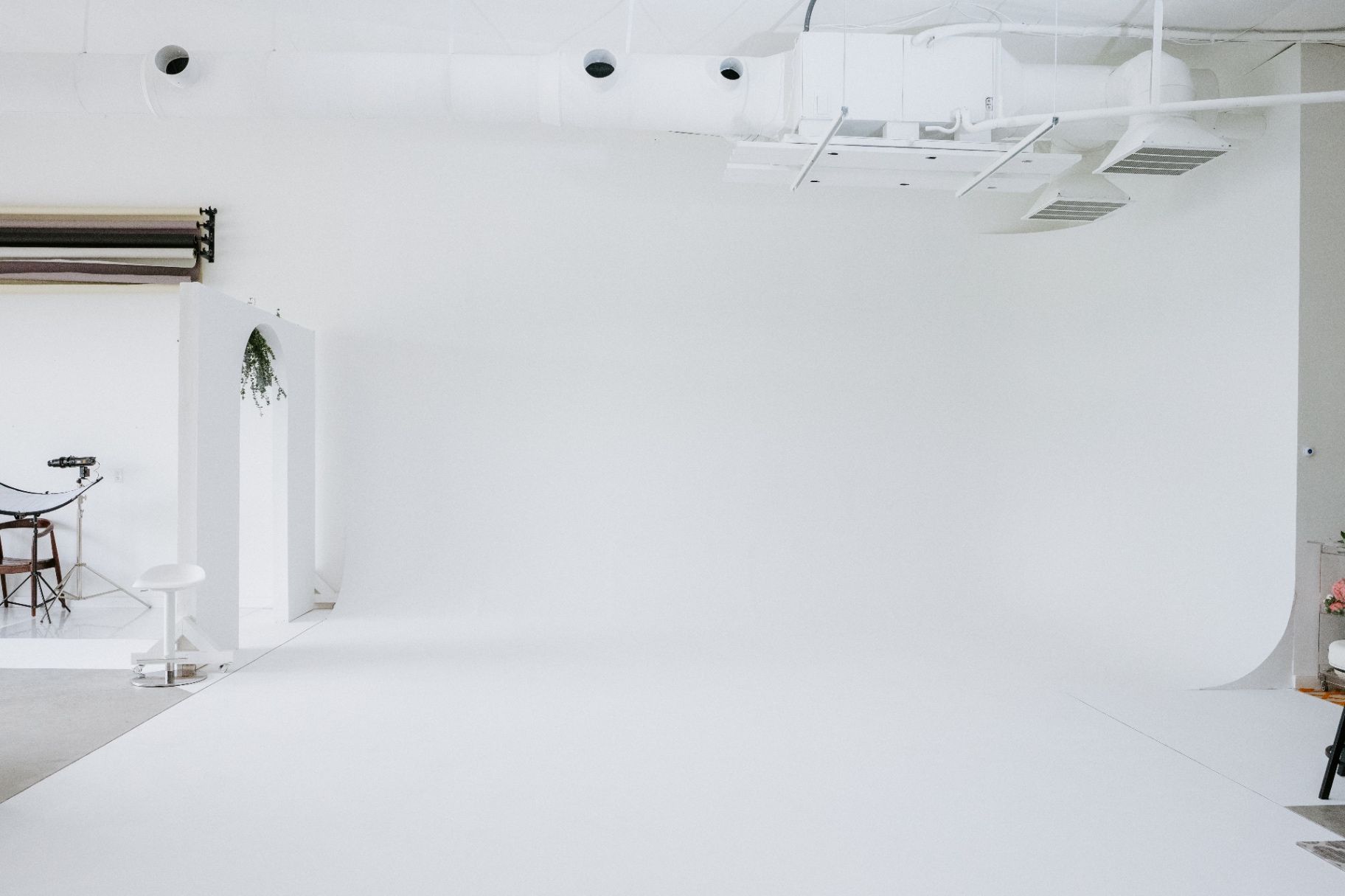
By utilizing a professional co-working studio, you can slash your monthly fixed overhead by 70%, which directly inflates that $800 profit back up to something you can actually live on.
The Final Math: Why It Adds Up to $800
Let’s look at the "real" invoice for that $3,000 wedding:
Gross Total: $3,000
Taxes (SE + Income): -$900
Second Shooter/Assistant: -$500
Gear Depreciation share: -$150
Software & Subscriptions share: -$100
Insurance/Legal share: -$50
Marketing & Client Gifts: -$200
Studio Rental/Prep (Von Creative): -$100
Travel & Misc: -$200
ACTUAL PROFIT: $800
Recap
Subscriptions: Adobe, CRMs, and gallery hosting are fixed costs that eat your margins first.
Taxes: Always set aside 30% of every check. The 15.3% self-employment tax is the "invisible" killer.
Gear: Treat your camera as a consumable asset that needs a replacement fund.
Studio Strategy: Renting a space like Von Creative reduces fixed overhead compared to a private lease.
Sustainability: If $800 isn't enough to pay your mortgage and buy groceries, you don't need "more clients": you need to raise your prices.
Final Takeaway: Value Your Time
The goal of this breakdown isn't to discourage you: it’s to empower you. When you realize that a $3,000 package only nets you $800, you stop feeling guilty about charging "so much." You realize that you aren't just a person with a camera; you are a business owner managing a complex operation with significant liabilities and overhead.
Price for sustainability, not just survival. Your talent deserves a business model that actually pays you.
Looking to lower your overhead and elevate your client experience?
Stop paying for a private studio you only use ten days a month. Join our community at Von Creative and get access to a luxury 2,000-square-foot space, pro lighting, and a massive prop library: only when you need it.