
Lens Math Made Easy: Picking the Right Glass Without the Headache
Walking into a camera store: or even just scrolling through an online gear forum: can feel like accidentally wandering into a high-level physics lecture. You’re there because you want to take beautiful photos, but suddenly you’re being hit with talk of "aspherical elements," "chromatic aberration," and the "inverse square law."
It’s enough to make anyone want to stick to their iPhone and call it a day.
At Von Creative, we see photographers at every stage of their journey. Some arrive with rolling trunks full of five-figure glass, and others show up with a single camera body and a dream. The secret we’ve learned from watching thousands of hours of shoots on our cyclorama wall is this: the "math" of lenses isn't nearly as complicated as the pros make it sound.
If you strip away the jargon, picking the right lens is actually about two very simple questions:
How much do I want to see?
How much do I want to hide?
The "How Much Do I See" Number (Focal Length)
The first number you’ll see on any lens is the focal length, measured in millimeters (mm). Think of this as your "zoom" factor.
In the simplest terms:
Small numbers (14mm, 24mm, 35mm): These are "Wide" lenses. They see a lot of the room. They make spaces feel bigger and can fit an entire family into the frame without you having to stand in the next zip code.
Large numbers (85mm, 135mm, 200mm): These are "Telephoto" lenses. They are zoomed in. They make things far away look close, and they "compress" the background, making it feel like it's hugging your subject.
Why the 50mm is the "Natural Eye"
You’ve likely heard the 50mm lens called the "Nifty Fifty." There’s a reason it’s the most recommended lens for beginners and pros alike. On a full-frame camera, the 50mm lens most closely mimics the human eye’s field of view.
When you look through a 50mm lens, the world feels "right." The proportions aren't distorted, and the distance between objects feels natural. It’s the ultimate storyteller’s lens because it doesn't add any "tricks": it just captures life the way we see it. It’s also incredibly lightweight, making it a favorite for long days in the studio.
The "How Much Do I Hide" Number (Aperture / F-Stops)
This is the part that usually gives people a headache. F-stops (like f/1.8, f/4, or f/11) represent the aperture: the hole inside your lens that lets light in.
The "math" here is backwards, which is why it's confusing. A smaller number means a bigger hole.
f/1.8: Big hole = tons of light + very blurry background (shallow depth of field).
f/11: Small hole = less light + everything is in focus (deep depth of field).
If you want those creamy, blurry backgrounds that make your subject "pop," you want a lens that can reach those lower f-stop numbers. This is what photographers call "shooting wide open."
Budget Bokeh: Getting "The Look" Without the $2,000 Price Tag
You don’t need a $2,000 "G-Master" or "L-Series" lens to get a beautiful blurry background. While high-end lenses are built like tanks and have incredible glass, you can cheat the "math" using physics.
If you’re working with a kit lens (the one that came with your camera, usually an 18-55mm f/3.5-5.6), you can still get great background blur by following three simple rules:
Move your subject away from the background: If your client is leaning against a wall, the wall will be in focus. If you move them 10 feet away from that wall, the wall will start to blur.
Get closer to your subject: The closer your lens is to what you’re shooting, the more the background will naturally drop out of focus.
Zoom all the way in: If you have a zoom lens, use the highest number (like 55mm or 70mm). Longer focal lengths naturally create more "separation" between your subject and the background.
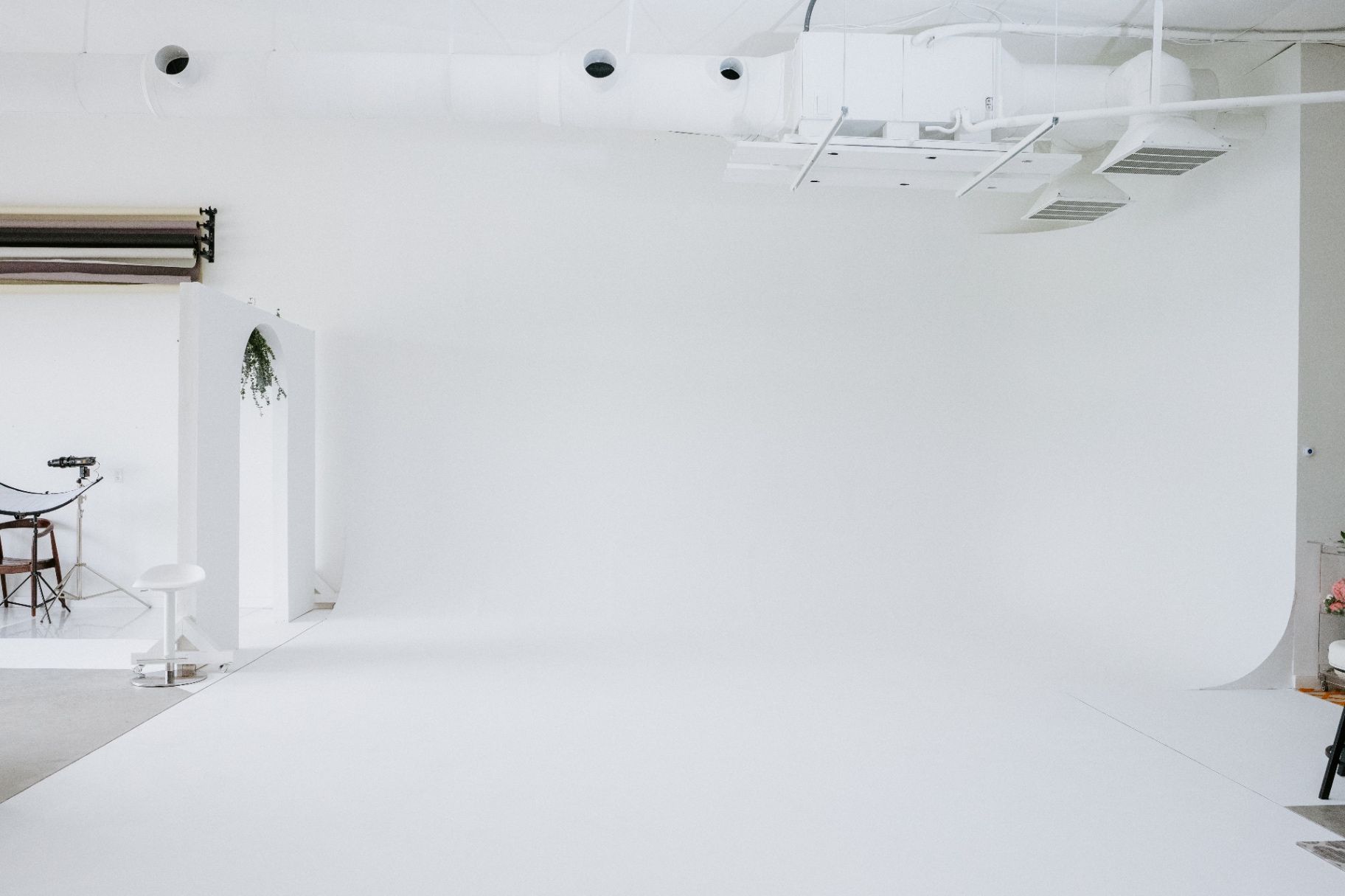
At Von Creative, we’ve designed our 2,000-square-foot space with this in mind. Our 40-foot wide shooting area gives you the physical room to move your subject away from the walls, allowing you to get that high-end look even with entry-level gear.
Choosing Your Tool for the Job
When you’re preparing for a shoot at the studio, choosing your lens is about the "vibe" of the session.
For Branding & Headshots: An 85mm or a 50mm is your best friend. These lenses are flattering on faces and won't distort features. They make your client feel like the hero of the story.
For Editorial & Fashion: Sometimes you want a little "drama." A 35mm lens is wider and lets you include more of the environment: perfect for showing off a beautiful outfit against our stone-colored backdrops.
For Newborns or Products: You might need a "Macro" lens or just a very sharp 50mm. You want to capture the tiny details: the eyelashes, the textures of the fabric, or the gold inlay on a luxe prop tray.


The Business of Gear: Why Rental Beats Buying
One of the biggest hurdles in a photography business is overhead. It is tempting to think that "if I just had that $2,500 lens, my business would take off."
The truth? Clients don't book you for your glass; they book you for your vision and your experience. Instead of sinking $10,000 into a lens kit that sits on your shelf most of the month, many of our regulars choose to invest in experiences like our upcoming workshops.
By renting a professional space like Von Creative, you get access to an elevated environment and professional lighting that can do more for your image quality than any single lens ever could.
A Quick Recap
Focal Length (mm): Low numbers see more (wide), high numbers see less (zoom).
50mm: The "sweet spot" that looks like the human eye.
Aperture (f-stop): Lower numbers (f/1.8) mean more blur. Higher numbers (f/11) mean more is in focus.
Fake it 'til you make it: Get more blur by moving your subject away from the wall and getting your camera closer to them.
Focus on the experience: Your gear is a tool, but your environment and your relationship with your client are what actually sell.
Elevate Your Next Session
Ready to put your new "lens math" knowledge to the test? Whether you’re rocking a vintage prime or the latest zoom, our studio is designed to help you succeed. With a massive 22-foot cyclorama wall, four pre-designed setups, and a library of over 900 props, all you need to bring is your camera and your creativity.
Book your session at Von Creative today and see what your glass can really do.