
The Science of Flattery: Posing Rules Every Photographer Needs to Know
There is a profound shift that happens in a photoshoot when a client moves from feeling "exposed" to feeling "seen." As photographers, we often focus on the gear: the glass, the sensor, the lighting modifiers: but the most technical piece of equipment in the room is often the human body itself.
Photography is, at its core, a translation. We are taking a three-dimensional, living being and flattening them into a two-dimensional frame. In that transition, things can get lost. Limbs can appear shorter, torsos can look wider, and natural grace can be replaced by a stiff, deer-in-the-headlights tension.
The "science" of flattery isn't about changing who a person is; it’s about understanding how the camera perceives depth and width. It’s about using geometry to guide the viewer’s eye and creating a silhouette that feels as dynamic on screen as the person feels in real life. Here is the archive of posing rules we lean on here at Von Creative to ensure every client leaves the studio feeling like their most confident self.
The "If It Bends, Bend It" Rule
If there is one cardinal rule in the studio, it’s this: joints are meant to be articulated. When a person stands with locked knees and straight arms, they become a vertical block. The camera reads this as static and heavy.
To create movement and softness, we look for the hinges.
Knees: A locked knee creates tension in the thigh and hip. A slight bend softens the entire lower body.
Elbows: Keeping arms slightly away from the body with a soft bend at the elbow prevents the limb from blending into the torso.
Wrists: A "broken" or soft wrist adds a touch of elegance and prevents hands from looking like heavy paddles.
Waist: A slight tilt or "pinch" at the waist immediately defines the midsection.
By introducing these small bends, you break up the straight lines of the body, making the overall silhouette feel more organic and approachable.
The 45-Degree Rule: Escaping the "ID Photo"
Facing the camera straight-on is the quickest way to maximize a subject’s apparent width. This is why passport photos and mugshots feel so unflattering; the camera is seeing the full, flat span of the shoulders and hips.
The 45-Degree Rule suggests that the subject should almost always be angled away from the lens. By rotating the torso roughly 30 to 45 degrees, you are effectively "shrinking" the amount of space the body takes up in the frame. This rotation creates a diagonal line across the frame, which our brains perceive as more aesthetically pleasing and slimmer than a horizontal one.
Even a slight turn of the shoulders while keeping the face toward the camera creates a sense of depth and "modeling" that a flat-on shot simply cannot achieve.
The 80/20 Weight Rule and the S-Curve
Natural-looking poses are built on a foundation of balance: or rather, intentional imbalance. In the world of classical art, this is known as Contrapposto.
The secret to a relaxed, flattering stance is the 80/20 weight distribution.
Ask your client to shift roughly 80% of their weight onto their back foot (the foot furthest from the camera).
The remaining 20% stays on the front foot, which should have a light, soft bend in the knee.
When the weight shifts back, the hip naturally pops out and up, and the spine follows with a gentle, serpentine curve. This creates the "S-Curve": a flow that travels from the head, through the torso, and down to the feet. It elongates the body and creates a natural taper at the waist.
Arms and the "Pancake Effect"
One of the most common complaints from clients is that their arms look "bigger" in photos than they do in the mirror. This is usually due to the "pancake effect." When an arm is pressed flat against the torso, the flesh spreads out, making the arm appear twice as wide. Furthermore, the arm blends into the body's silhouette, adding bulk to the waistline.
The solution is negative space.
By creating a "gap" between the arm and the torso: even just an inch or two: you achieve two things:
The arm maintains its actual shape because it isn't being compressed against the body.
The viewer can see the natural "pinch" of the waist behind the arm, which defines the torso.
Think of it as creating "light" between the limbs. If the camera can see through the gap between an arm and a hip, the entire silhouette feels lighter and more sculpted.
The Rule of Triangles in Composition
In photography, triangles are the strongest shape for guiding the eye. When you use limbs to create triangles, you create a more dynamic and slimming silhouette.
Instead of letting limbs hang straight (which creates boring parallel lines), look for ways to create angles. A hand on a hip creates a triangle. A bent leg creates a triangle. Even the space between two people standing together can form a triangle. These shapes act as visual arrows that point the viewer toward the subject's face, while simultaneously breaking up the "blocky" mass of the body into smaller, more interesting segments.
Light as the Final Sculptor
At Von Creative, we believe that posing is only half the battle. The second half is how light interacts with those poses. Our 2,000-square-foot studio is designed to offer soft, directional lighting: whether through our massive windows or our professional strobe setups on the 22-foot cyclorama wall.
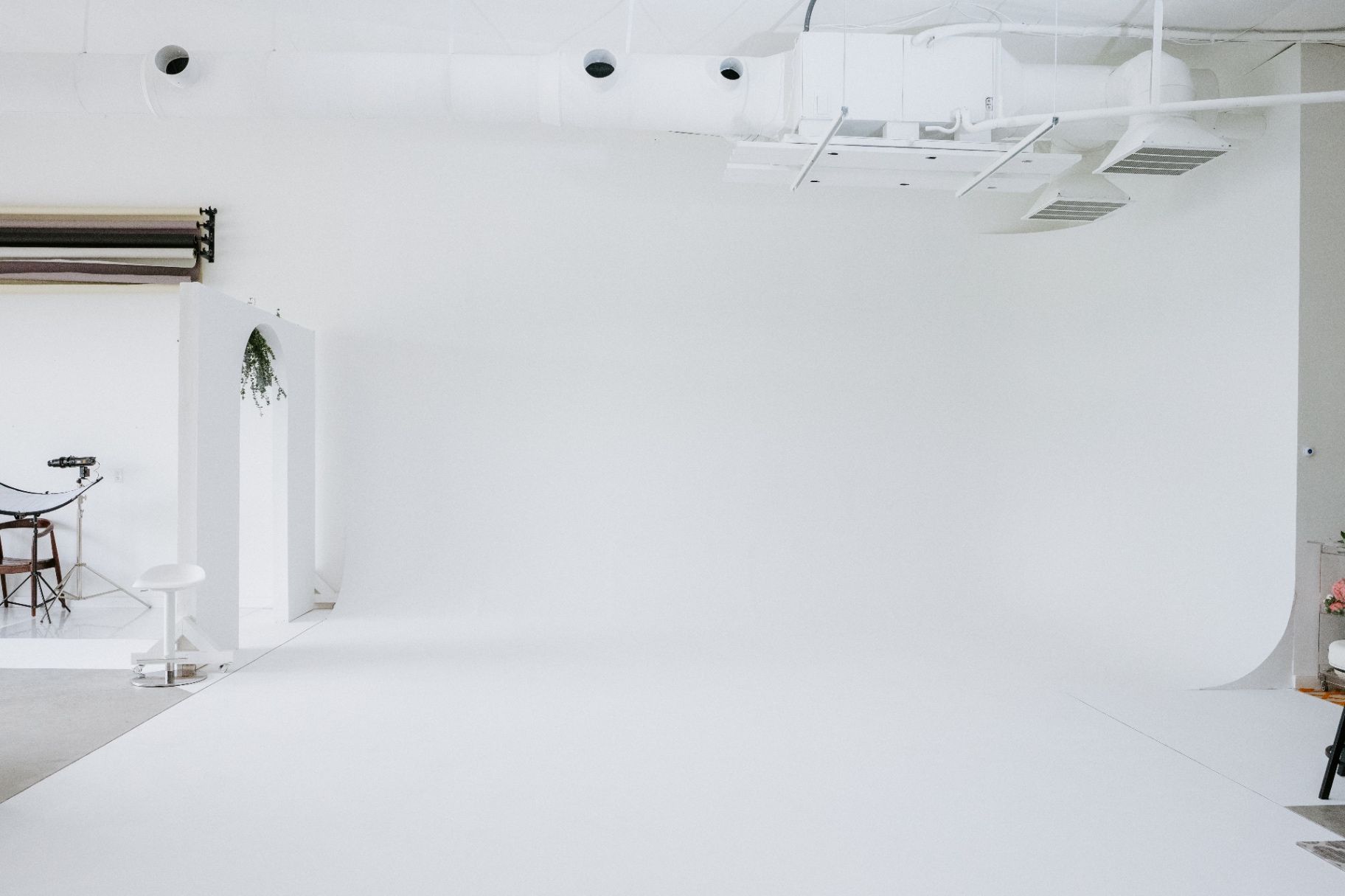
Directional light creates "shadow modeling." When you use the 45-degree rule and the S-curve, the light catches the high points of the body (the cheekbones, the collarbones, the front of the thigh) and leaves the receding parts in gentle shadow. This natural contouring works in tandem with your posing to sculpt the body and add a layer of professional polish that "flat" lighting can't match.
A Quick Recap for Your Next Shoot
Before you press the shutter, run through this mental archive:
Check the Joints: Are the knees, elbows, and wrists soft and bent?
Rotate the Torso: Is the client at a 45-degree angle to the lens?
Shift the Weight: Is 80% of the weight on the back foot to create that S-curve?
Mind the Gaps: Is there negative space between the arms and the torso to avoid the pancake effect?
Find the Triangles: Are the limbs creating dynamic, angular shapes?
Posing isn't about perfection; it's about comfort. When you can guide a client through these rules with a warm, casual tone, they stop worrying about how they look and start focusing on how they feel. And a client who feels empowered is always the most flattering subject you can capture.
Ready to Practice Your Posing?
Mastering the science of flattery takes practice, and there’s no better place to hone your skills than in a space designed for it. Whether you're looking for a private studio rental to work one-on-one with a client or want to join one of our educational workshops to learn from industry pros, Von Creative is your home base in North Carolina.
Book Your Studio Session Today and let’s create something timeless.