
The Geographic Mirage: Spotting the 'Virtual' Studio on Wedding Listing Sites
The glow of a laptop screen at midnight is a familiar sight for many couples in the early stages of wedding planning. They scroll through endless grids of smiling faces and golden-hour portraits on popular listing sites, filter by "Raleigh, NC" or "Wilmington," and trust that the results reflecting back at them are exactly what they seem: local artists rooted in the community.
But for the independent photographer, there is a quiet, frustrating reality beneath the surface of these directories. Many of the "local" studios appearing at the top of the search results aren't local at all. They are what we might call the "Virtual Studio", large, out-of-state corporations that have purchased a "geographic seat" in your market, despite having no physical presence, no local studio, and often, no permanent staff in the area.
This "geographic mirage" creates a complex hurdle for both couples and the truly local photographers who serve them. Understanding how to navigate this landscape, and how to help your clients see through the smoke and mirrors, is essential for the modern, owner-operated studio.
The Invisible Borders of Listing Sites
Most major wedding platforms operate on a "pay-for-play" tier system. A company based in California or New York can pay to appear in the top results for a dozen different states simultaneously. By purchasing these "seats," they effectively crowd out local small businesses.
To a couple, these companies look like large, successful local firms. In reality, they are marketing engines. They don't have a storefront, they don't host meetings in a studio like Von Creative, and the person responding to the initial inquiry is often a sales representative in a call center, not the artist who will be holding the camera on the wedding day.
The Associate Lottery: Vetting vs. Contracting
The most significant risk of the "Virtual Studio" is the outsourcing model. While many boutique local studios use a wonderful "Associate" model, where a lead photographer mentors and trains a smaller team to maintain a specific brand standard, national chains often function as a gig-economy clearinghouse.
The Stranger Factor: These large entities often hire local contractors they have never met in person. The "lead" photographer assigned to a wedding might be someone who just cleared a basic background check and owns a camera, rather than a seasoned professional with a long-term investment in the studio’s reputation.
The First Meeting: In many cases, the couple meets their photographer for the very first time on the morning of their wedding. There is no pre-wedding coffee, no engagement session to build rapport, and no shared history.
The Accountability Gap: If something goes wrong, the couple is left dealing with a corporate office hundreds of miles away, rather than a local business owner who is deeply integrated into the regional wedding industry.
The Associate Gamble: What Trust Feels Like on a Wedding Day
This is the part that often gets softened in marketing copy. On paper, an assigned associate can sound perfectly reasonable. In practice, weddings are intimate, emotionally loaded, and deeply human. The person photographing the zipper being pulled up, the parent trying not to cry, or the quiet five minutes after the ceremony is not just operating a camera. They are stepping into a small circle of trust.
When a couple has spent weeks or months bonding with one person, only to have someone else arrive on the day, the shift can feel subtle but unsettling.
Emotional whiplash: The couple may have built comfort with the salesperson or lead brand representative, not the actual photographer. That means the emotional safety they thought they purchased may not be there when it matters most.
Less candor, less ease: People open up differently with someone they know. A stranger, even a talented one, can change how relaxed a couple feels during getting ready, portraits, and family interactions.
More performance, less presence: Instead of being able to settle into the day, some couples become slightly more self-conscious, polite, or guarded around a new face. It is hard to look effortless when your nervous system is still trying to read the room.
Intimate moments become transactional: The morning can start to feel like a handoff rather than a continuation of a relationship. That may sound dramatic, but wedding photography is built on access, and access is built on trust.
For photographers, this is an important distinction to articulate with care. The issue is not that associate teams are inherently bad. Many are excellent. The issue is whether the team structure was transparent from the beginning, whether the couple had a real chance to know their assigned photographer, and whether the studio has a genuine training culture rather than a warm body with a calendar opening.
A well-built associate model feels like an extension of the same hand. A virtual studio model can feel more like event staffing with a mood board.
The Technical Rift: Gear and Style Inconsistency
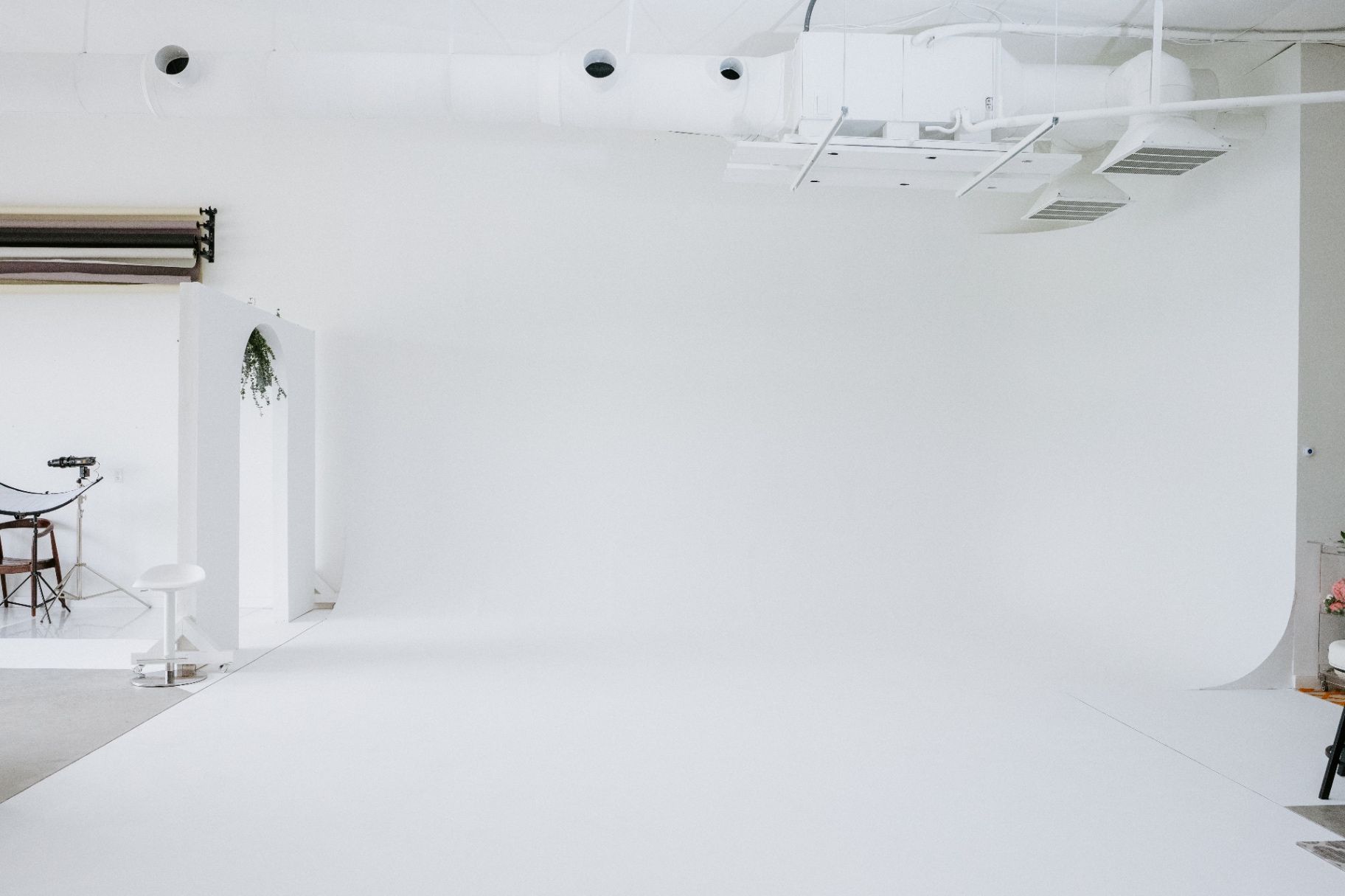
Consistency is the hallmark of a professional brand. When you walk into a space like the Von Creative studio, you see a standard of excellence, from the clean cyclorama wall to the high-end lighting gear. Local studios invest heavily in maintaining a specific look and ensuring their team uses compatible equipment.

In contrast, "Virtual Studios" struggle with technical fragmentation. One contractor might shoot on a mirrorless Sony system with a bright, airy style, while the person assigned to the next wedding uses a DSLR Canon with a moody, cinematic approach. Because the editing is often outsourced to a separate mass-processing facility, the final images can feel "assembled" rather than "authored."
Why Gear Consistency Matters More Than Couples Realize
To most couples, a camera is a camera. If it is black, expensive-looking, and hanging from a harness, it probably reads as professional enough. But photographers know the truth: a camera system is not just a container for megapixels. It affects how color is interpreted, how skin is rendered, how highlights roll off, how flash integrates with ambient light, and how easily a set of files can be edited into one seamless story.
This is why a calibrated team is not interchangeable with a stranger carrying "any" camera.
Sensor rendering changes the feel of an image: Different camera sensors interpret contrast, dynamic range, and highlight retention in different ways. One body may hold detail beautifully in a white dress during harsh midday light, while another clips sooner or renders the same scene with a different tonal curve.
Color science is not imaginary: Photographers debate this endlessly because it matters. Sony files often get described as cleaner or more neutral, while Canon is frequently preferred for the way it handles warmth and skin tones, especially in mixed light. Neither is objectively "better" in all situations, but they are different. On a wedding day, different can become obvious fast.
Skin tones are where inconsistency shows first: Couples may not be able to name color science, but they can absolutely feel when one gallery leans peachy, another leans magenta, and family formals suddenly look cooler than the getting-ready images. Human skin is the great truth-teller in post-production.
Lens ecosystems shape the brand look too: A photographer using a sharp, contrast-heavy lens setup will produce a different feel than someone relying on softer glass with more flare and gentler falloff. Even before editing begins, the files are already telling different stories.
Flash behavior and white balance discipline matter: Off-camera flash, on-camera bounce, LED video lights, DJ uplighting, church tungsten, window light at noon—weddings throw all of it into the same day. A team that shares systems, presets, metering habits, and white balance discipline can move through those changes with much more consistency.
Editing cannot fix everything elegantly: Yes, a strong editor can pull files closer together. But "close enough" is not the same as cohesive. If the raw ingredients are all over the place, the gallery often carries that tension underneath the surface.
A well-run local team usually builds around repeatable variables:
Shared camera systems
Similar lenses and lighting tools
Matching backup workflows
Calibrated monitors
Common presets or color profiles
A clear philosophy for skin tone editing
That kind of consistency is quiet. Couples may never be able to identify why the gallery feels polished and whole, but they notice the result. The day looks like one memory, not five conflicting interpretations stitched together after the fact.
By contrast, a virtual studio often relies on whoever is available in a given zip code. That can mean one wedding is captured on Canon bodies with warm rendering and another on Sony with cooler default color behavior, then both are funneled through the same outsourced editing pipe. The promise on the website stays uniform. The files underneath it do not.
And this is the deeper point: technical consistency is not gear snobbery. It is quality control. It is the difference between a brand with an authored visual language and a booking platform wearing a nice font.
Talking Points: Educating Your Clients
As a local photographer, your goal isn't to disparage the competition, but to empower your clients with the right questions. When a couple mentions they are looking at one of these national brands, you can gently guide them toward a deeper discovery:
"Will I meet my actual photographer before I book?" This is the most critical question. If the answer is no, it’s a red flag.
"Can I see a full gallery from the specific person who will be at my wedding?" National companies often show a "best of" portfolio that doesn't reflect the work of the person they will eventually assign to the date. In some cases, with the growing trend of an untethered use of images by AI, some companies may want to have you view these galleries in person as a precaution to protect couples intimate moments. Take them up on this offer and come in person!
"Where is your home base located?" If they don't have a local presence, they lack the local knowledge of venues, lighting nuances in our specific region, and local vendor relationships that make a wedding day run smoothly.
"Who handles the editing?" Explain that your studio handles everything in-house to ensure the vision you captured on the day is the one that ends up in their heirloom album.
Shadow Studio Vetting Guide
For couples trying to sort out what is real and what is beautifully packaged fiction, a few pointed questions can reveal a great deal very quickly. You do not need to interrogate anyone. You simply need to listen closely to whether the answers are direct, specific, and human.
Ask these questions:
"Who, exactly, will photograph our wedding, and when will we speak with them?"
If the answer stays vague, or turns into "someone from our team will be assigned later," that tells you a lot."Can we see 2-3 full wedding galleries from that exact photographer?"
Not a homepage portfolio. Not an Instagram grid. Full galleries from real wedding days."Are they an employee, an associate you trained, or an independent contractor you book per event?"
Those are three very different business models, and they carry different levels of consistency and control."If our assigned photographer gets sick or unavailable, what is your replacement process?"
A thoughtful studio will have a clear contingency plan. A shadow operation often has a loose network and a hopeful tone."Who edits our images, and does the photographer have input on the final gallery?"
If the person behind the camera never sees the final edit decisions, the brand experience may be far less connected than it appears."Where are you physically based, and do you regularly work at our venue or in our area?"
Real local knowledge sounds specific. Vague familiarity tends to sound like copywriting.
These questions do not make a couple difficult. They make them informed. A legitimate studio should be able to answer them without getting defensive, foggy, or suddenly very eager to move the conversation back to the payment schedule.
The Power of Being Truly Present
There is a quiet, irreplaceable value in being a local fixture. Being the photographer who can invite a client into a professional workspace for a consultation or a branding session builds a level of trust that a "virtual" entity simply cannot replicate.

When you use a shared creative hub like Von Creative, you aren't just renting a room; you are signaling to your clients that you are part of a tangible, professional community. You are a person, not a profile on a distant server.
A Recap of the Mirage
Geographic Seats: Be aware that listing sites allow companies to "buy" their way into your local search results.
Outsourced Talent: National companies often use contractors they’ve never met, creating a disconnect in service, trust, and accountability.
The Human Fit Matters: Couples are not only hiring coverage; they are inviting someone into intimate, unrepeatable moments. Relationship and rapport are part of the product.
Consistency Matters: True brand consistency comes from shared gear, shared training, calibrated editing, and a technical workflow that does not change wildly from one contractor to the next.
Read the Contract Closely: If a third-party contractor is involved, the paper trail should make that structure clear rather than burying it in vague substitution language.
Empower the Couple: Teach your clients to ask pointed, respectful questions about who will actually be behind the lens and how the business is really built.
Join the Community
Don't let your business get lost in the digital mirage. Building a strong, local presence starts with connecting with other creatives who value quality and community as much as you do.
For photographers, this is the quieter invitation underneath the whole conversation: build a business that can be felt, not just found in a directory. Let your process be tangible. Let your client experience have a real address, a real workflow, and a real sense of care.
Ready to elevate your client experience? Book a tour of Von Creative and see how our 2,000-square-foot studio can become the professional home your brand deserves. Whether you're hosting a client meeting, refining your workflow, or creating a brand experience that feels unmistakably grounded, we’re here to help you stay rooted, stay local, and stay exceptional.