
Studio Size Matters: Why a 40-Foot Wide Space is the Key to Better Portraits
The Science of Studio Width
I. Subject-to-Background Separation
In a 40-foot wide space, the photographer can position the subject significantly forward from the cyclorama wall. This physical gap allows for independent lighting control of the background and the subject. By increasing the inverse square law's impact, photographers can achieve a pure white background or a soft grey fall-off without light spill contaminating the subject’s hair or skin.
II. Minimizing Lens Distortion
Standard portraiture often suffers in small studios (less than 15 feet wide) where the photographer is forced to use a 35mm or 50mm lens for full-body shots. These focal lengths introduce barrel distortion and perspective elongation. The 40-foot span at Von Creative permits the use of an 85mm lens for full-length captures, ensuring the subject's proportions remain true to life. This is critical for fashion editorial and high-end commercial branding.
III. Compression and Depth
Telephoto lenses (100mm+) compress the distance between the subject and the background. In a large studio, this compression creates a professional, "high-end" look that cannot be replicated in smaller home studios or cramped commercial units. The width ensures that even with large softboxes or 7-foot umbrellas, the photographer still has ample room to navigate and adjust angles without hitting walls or equipment.
The Beauty of Distance
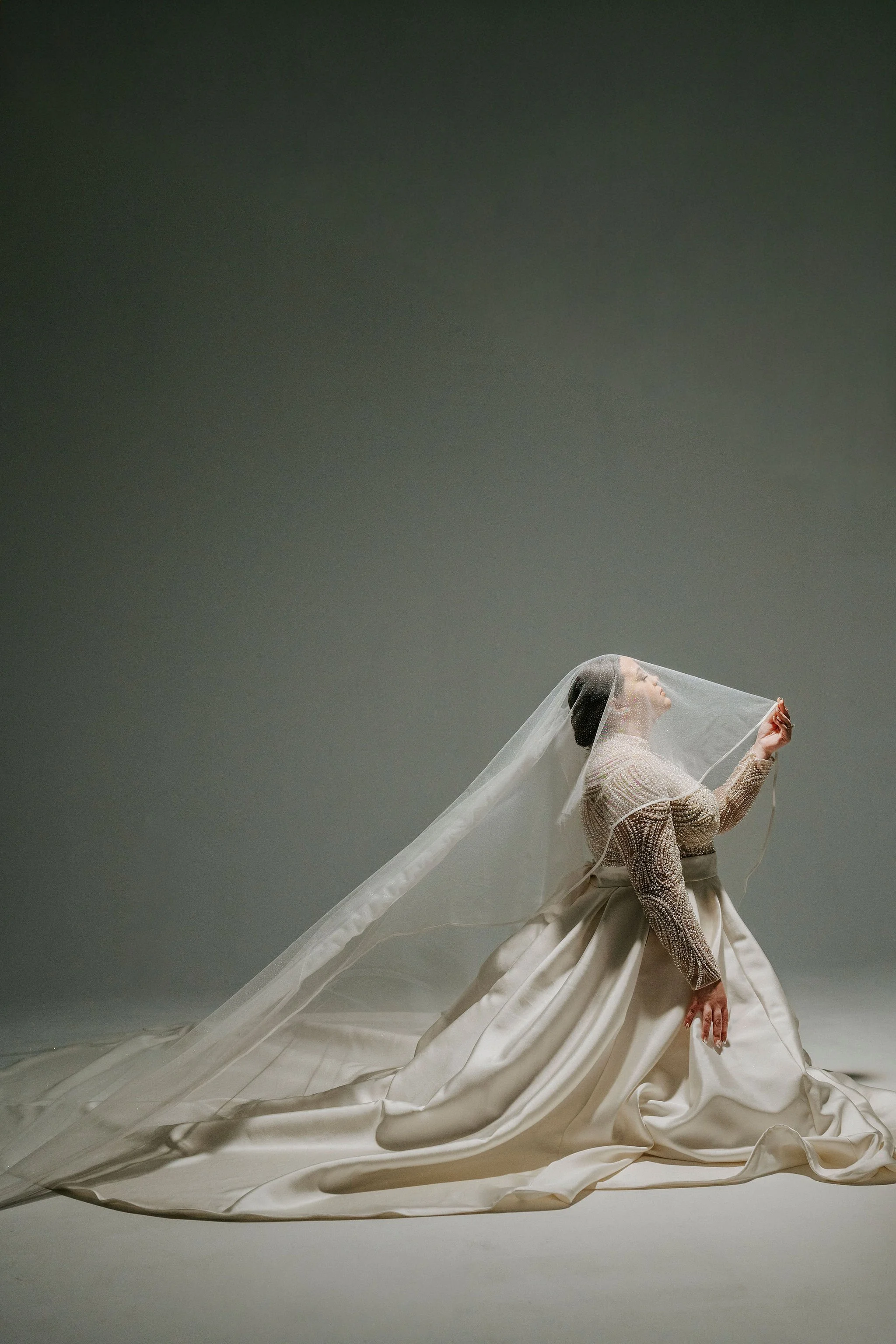
Room to separate subject and backdrop: In a 40-foot wide studio, it’s easier to bring a subject forward from the cyclorama wall, which creates a softer sense of depth and more control over how light settles across the frame.
Natural-looking portraits: In smaller rooms, photographers often have to work too close. Here, there’s enough space to use portrait-friendly focal lengths for full-length images, helping features and body lines feel more natural and relaxed.
Depth that feels effortless: The extra width brings a polished sense of dimension to portraits, branding sessions, and editorial work. Even with larger modifiers and lighting setups, the room still feels open, easy to move through, and unhurried.
Hospitality & Creative Comfort
Beverage Station: Complementary coffee, water, and refreshments for clients and crew.
Lounge Area: Seating for clients during setup changes or business meetings.
Support: On-site studio assistant available for equipment retrieval and lighting setup assistance.
Technical Specifications of the Studio
Total Footprint: 2,000 Square Feet
Primary Shooting Width: 40 Feet
Cyclorama Wall: 22 Feet Wide
Trim Wall: 25 Feet Wide (Picture Box Design)
Backdrops: Seamless Paper (Multi-color), Fabric, and Textures
Connectivity: High-speed Fiber Internet
Accessibility: Ground-level, Baby Changing Station, Accessible Layout
Perspective Control
Working Distance: With 40 feet of width, there’s room to step back, breathe, and compose with intention.
Portrait Lenses: The space welcomes 85mm, 105mm, and 135mm lenses beautifully.
Preserving Natural Proportions: A little more distance helps faces and figures feel calm, balanced, and true to life.
A Clean Frame: Full-body portraits and group images can be made without forcing a wide angle, so edges stay gentle and proportions stay natural.
Cyclorama Ease: The 22-foot curve creates a seamless backdrop with no hard horizon line, making the frame feel open, soft, and uninterrupted.
Equipment & Assets
Total Inventory: 900+ Items
Lighting: Professional Strobes, Continuous LED, Softboxes, Parabolic Reflectors, Grids, and Scrims.
Props: Minimalist furniture, Rattan chairs, Ceramic vases, Textured platforms.
Wardrobe: On-site Client Closet (Curated selection for maternity and editorial).
Backdrops: 9-foot seamless rolls, hand-painted canvases, and movable flats.
Stations: Dedicated Beauty/HMUA stations with professional lighting and mirrors.